
What Is Soft Saving? The Quiet Money Trend Reshaping How India Saves
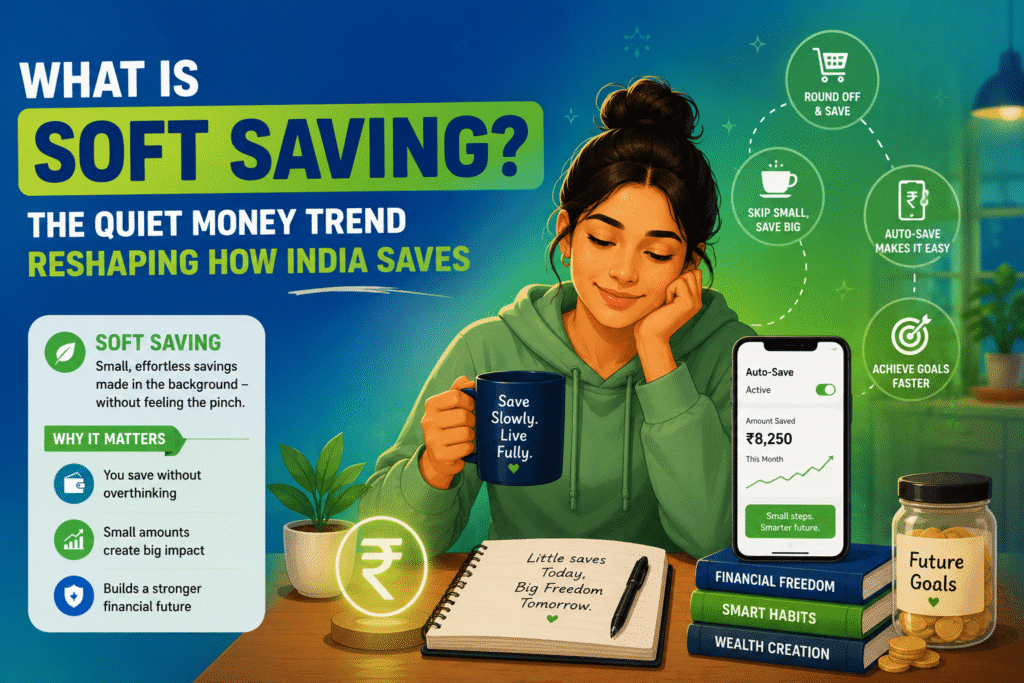
Table of Contents
Scroll through Instagram for five minutes and you’ll spot it: someone quitting the 9-to-5 grind, booking a solo trip to Spiti, and captioning it “choosing peace over hustle.” That’s soft life. Its financial twin, soft saving, is quietly rewriting how an entire generation of Indians thinks about money.
If you’ve ever skipped your SIP this month because a weekend trip felt more urgent, you’ve already dipped a toe into soft saving. The real question is whether you’re doing it on purpose, or your bank balance just decided for you.
Here’s what soft saving actually means, why it’s spreading fast among Indian millennials and Gen Z, and whether it’s a smart money move or a slow-motion financial trap—especially when compared to aggressive strategies like the FIRE movement lifestyle.
Soft Saving Meaning: What Exactly Does This Trend
Soft saving is the practice of saving less aggressively for the future so you can spend more on living well right now. Think travel, hobbies, therapy, a better apartment, weekend brunches — anything that improves your life today, even if it means your retirement fund grows more slowly.
It’s the financial cousin of the soft life movement, which rejects 80-hour workweeks in favour of balance and mental peace. Where soft life is about how you work, soft saving is about how you spend and save.
Soft savers usually aren’t reckless. Most still keep a small emergency fund and put something away each month. They just refuse to sacrifice every present-day joy for a retirement that feels decades away and uncertain.
Soft Saving vs FIRE vs Traditional Financial Planning
| Approach | What You Do | What You Give Up |
|---|---|---|
| FIRE | Save more than half of what you earn so you can stop working by 40 | You enjoy less today, but you’re set up for life later |
| Traditional saving | Save about a quarter of your income, spend the rest after | A decent middle ground, but it can feel restrictive |
| Soft saving | Save only as much as feels easy, spend the rest on a better life now | You enjoy more today, but your future savings take a hit |
The Rise of the Soft Saving Trend in India
- Metro rent and daily costs eat up a huge chunk of salary, leaving little room for the aggressive saving that older generations managed.
- Layoffs and an unpredictable job market make a 30-year retirement plan feel like guesswork.
- Burnout from hustle culture has pushed mental health and work-life balance to the top of the priority list.
- Social media normalises spending on experiences over accumulating wealth quietly in a bank account.
- Many young earners have watched relatives sacrifice everything for retirement, only to face health issues or economic shocks that ate into those savings anyway.
The Real Cost of Soft Saving
It isn’t free. The highest hidden cost is lost compounding, and the numbers are bigger than most people expect.
Say you invest ₹5,000 a month through a SIP earning roughly 12% a year. Start at 25, and by 60 you could be sitting on a corpus of around ₹3.2 crore. Start the same SIP at 35 instead, and that number drops to roughly ₹95 lakh by 60. Ten “soft” years can cost you more than two-thirds of your final corpus.
These figures are illustrative, assuming a constant 12% return, and actual market performance will vary. The lesson holds regardless of the exact numbers: time in the market matters more than the amount you start with.
- Smaller emergency funds leave soft savers exposed to job loss, medical bills, or sudden repairs.
- Retirement shortfalls mean leaning harder on EPF or NPS alone, which often isn’t enough to maintain your current lifestyle.
- Lifestyle creep can quietly turn “soft saving” into “no saving” if spending isn’t tracked.
How to Soft Save Without Wrecking Your Future
- Automate a baseline SIP or EPF contribution before you even see the money hit your account.
- Build a 3 to 6-month emergency fund before loosening up on lifestyle spending. Use the 50-30-20 rule as a flexible guide, not a strict rulebook.
- Track your “soft spending” every month so it doesn’t quietly swallow your entire paycheck. Bump up your SIP every time you get a raise, so lifestyle creep doesn’t eat 100% of the increase.
Is this Right for You?
It tends to work well if you have a stable income, manageable EMIs, an existing emergency fund, and a long runway before retirement. It’s riskier if you’re carrying high-interest debt, have no emergency fund, or are within five years of a major goal like buying a home, a wedding, or your child’s education.
It isn’t inherently good or bad. It’s a mindset shift that works best when it’s a deliberate choice, not a default that happens because saving felt too hard this month. Build your non-negotiables first, automate them, and spend the rest on the life you actually want to live.
Frequently Asked Questions
What does soft save mean?
It means choosing to save less aggressively so you can spend more on your life today, like travel, hobbies, or a better lifestyle. You still save something, just not at the cost of your present-day happiness.
Is soft savings the opposite of the FIRE movement?
Yes. FIRE pushes you to save 50 to 70 per cent of your income to retire early, while soft saving prioritises comfort and balance over an aggressive retirement timeline. Soft saving sits at the relaxed end of the savings spectrum.
Is soft saving a good financial strategy?
It depends on your situation. Soft saving works fine if you already have an emergency fund and a baseline SIP running, but it can backfire if it means saving nothing at all.
How much should I save if I want to soft save responsibly?
Most planners suggest keeping at least 15 to 20 per cent of your income going toward savings and investments, even while soft saving. The 50-30-20 rule is a simple starting framework you can loosen as needed.
Will soft savings hurt my retirement corpus?
Saving less for ten extra years can shrink your final corpus dramatically because you lose years of compounding. Starting your SIP at 25 instead of 35 can mean a corpus several times larger by retirement.
Is soft saving the same as soft life?
Soft life is about how you work and live, prioritising low stress over hustle culture. Soft saving is its financial extension, which is how that mindset shows up in your spending and saving habits.
This article is for general information only and isn’t personalised financial advice. Talk to a qualified financial advisor before making decisions about savings, investments, or retirement planning.